
Manchester cancer research team awarded prestigious NIHR20 Impact Prize
Researchers based at Manchester University NHS Foundation Trust (MFT) and The University of Manchester (UoM), supported by the National Institute for Health and Care Research (NIHR) Biomedical Research Centre (BRC): Manchester, have been awarded a prestigious NIHR20 Impact Prize.
Professor Emma Davidson, NIHR Research Professor, Honorary Consultant in Gynaecological Oncology at Saint Mary’s Hospital (part of MFT), Professor of Gynaecological Oncology at UoM and head of the ‘Team Womb’ collective, was presented with the award at a ceremony in London for her team’s influential research into the link between Lynch syndrome and womb cancer.

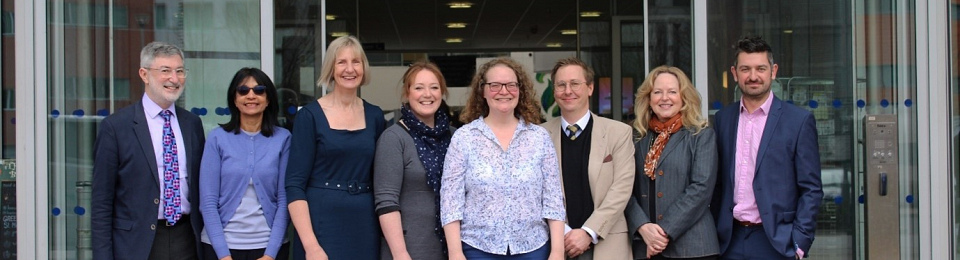
Professor Emma Davidson pictured at the ceremony (middle right) with all the award winners.
The awards celebrate researchers and teams who have made an extraordinary impact on health and care outcomes, transforming patient care across the UK and internationally.
The team’s research was recognised for the real-world impact their work has had, including directly influencing new national clinical guidelines. The research led to the roll out of a new genetic testing programme that identifies people with Lynch syndrome who are at higher risk of womb, bowel and other cancers.

Professor Emma Davidson, NIHR Research Professor, Honorary Consultant in Gynaecological Oncology at Saint Mary’s Hospital
Winning the NIHR20 Research Team Impact Prize is an incredible milestone for our team, but the real reward is knowing that our work on Lynch syndrome is actively saving lives. Moving from research to real-world clinical practice means fewer missed diagnoses and a clearer pathway to cancer prevention for families affected by womb cancer. We are extremely grateful to the NIHR for this honour and for supporting research that delivers a tangible, lasting impact on families.
Lynch syndrome is a genetic condition that runs in families and can significantly increase the risk of developing cancer. It affects around 1 in 300 people, with most unaware that they have it.
A comprehensive research project from Team Womb found:
- 3% of womb cancers are linked with Lynch syndrome.
- The best way of testing for Lynch syndrome in womb cancer.
- Gynaecology-led testing is acceptable and reduces delays.
- Women want to be tested for Lynch syndrome.
- Testing people for Lynch syndrome is cost-effective for the NHS.
As a direct result of the team’s research, the National Institute for Health and Care Excellence (NICE) released new guidance recommending that everyone with womb cancer should be offered testing for Lynch syndrome. Family members (either parents, siblings or children) of people who test positive for Lynch syndrome can now also be tested for the condition. This test could prevent people from developing cancers in future by allowing people access to preventive care. For example, people with Lynch syndrome are eligible for bowel cancer screening.
The research has had a significant impact on clinical care. New NICE guidance led to an increase in Lynch syndrome testing rates and faster testing times for women with womb cancer. This means that around 1,000 new people per year in the UK can now benefit from cancer prevention strategies.
Most importantly, the research is benefitting people by allowing them to make informed decisions about their health. Helen, a person who tested positive for Lynch syndrome, said: “I can now take steps to reduce my chance of getting other cancers and, crucially, my family have all been tested too.”

Some members of ‘Team womb’ at Saint Mary’s Hospital
On receiving the NIHR20 Impact Prize, Cancer Prevention and Early Detection Co-Theme Lead at NIHR BRC: Manchester, Professor Davidson said: “We are absolutely thrilled and deeply honoured to receive this award. This recognition underscores the vital importance of embedding genetic testing directly into routine womb cancer care. By identifying Lynch syndrome early, we aren’t just changing how we treat a person’s current diagnosis, we are opening the door to life-saving preventive care and surveillance for their entire family. This award belongs to the entire team and the patients who inspire our work every day.”
Selected from a highly competitive field of entries, this year’s 11 winners – comprising seven research teams or individuals and four early-career researchers alongside nine commended entrants – illustrate the depth of talent, dedication, and life-changing work taking place today across the UK’s research sector.
Professor Lucy Chappell, Chief Scientific Adviser at the Department of Health and Social Care and Chief Executive Officer of the NIHR, said: “I offer my warmest congratulations to all the excellent winners and commended teams of this year’s NIHR Impact Prizes, who have all made a crucial contribution to changing lives through research.”
Professor Anne Barton, Director of the NIHR BRC: Manchester, said: “Huge congratulations to Professor Emma Davidson and the whole team on receiving this prestigious award. It is amazing to see our research moving from project concept through to saving people’s lives. I am delighted the team have been recognised with this honour.”
Team Womb includes: Dr Rhona McVey, Dr James Bolton, Dr Louise Gorman, Ms Nadira Narine, Professor Emma Davidson, Professor Katherine Payne, Dr Neil Ryan, Professor Ray McMahon (who sadly died in 2025), Professor Gareth Evans and Dr Durgesh Rana.
Read more about this year’s winners on the NIHR website: https://www.nihr.ac.uk/nihr20/about-us/our-impact/impact-prizes/2026